

Neuropathic pain is one of the most challenging pain conditions to manage, both because its underlying mechanisms differ fundamentally from those of inflammatory or nociceptive pain and because conventional pharmaceutical treatments for it are often only partially effective and frequently accompanied by significant side effects. Understanding what neuropathic pain is, how it arises, and what the evidence says about natural approaches to managing it is increasingly relevant as the limitations of standard pharmaceutical management become more widely recognized and as the research base for natural alternatives continues to grow.
Neuropathic pain arises from damage or dysfunction of the somatosensory nervous system itself, rather than from activation of pain receptors by tissue injury or inflammation. This distinction is fundamental to understanding why it responds differently to treatment than other pain types and why it often persists long after the original injury or disease process has resolved or stabilized. The nervous system, once sensitized or damaged, can generate pain signals independently of peripheral tissue damage, creating a self-perpetuating pain state that does not respond to the anti-inflammatory or simple analgesic approaches that address other pain types.
The mechanisms that generate neuropathic pain
Several distinct but often co-occurring mechanisms contribute to the generation and maintenance of neuropathic pain, and understanding them explains both why this condition is so persistent and why targeting multiple mechanisms simultaneously tends to produce better outcomes than single-mechanism approaches.
Peripheral sensitization occurs when damaged or dysfunctional peripheral nerves develop abnormal electrical activity, generating spontaneous pain signals without any external stimulus. This ectopic discharge arises from changes in ion channel expression and function at the site of nerve damage, particularly sodium channels that become overexpressed and hyperactive in injured nerve fibers. The burning, shooting or electric shock sensations that many neuropathic pain patients describe reflect this abnormal spontaneous neural firing.
Central sensitization is perhaps the most clinically significant mechanism in established chronic neuropathic pain. Persistent abnormal input from peripheral nerves produces lasting changes in the pain processing neurons of the spinal cord and brain, lowering their activation thresholds and expanding their receptive fields. The result is allodynia, where stimuli that would normally be painless such as light touch become painful, and hyperalgesia, where normally painful stimuli produce disproportionately intense pain. Central sensitization represents a form of pathological neuroplasticity that can persist even after the peripheral nerve damage that initiated it has partially resolved.
Loss of descending inhibition compounds the problem. Under normal circumstances, the brain modulates incoming pain signals through descending inhibitory pathways that use serotonin, norepinephrine and endogenous opioids to dampen spinal cord pain processing. In chronic neuropathic pain, these inhibitory systems frequently become impaired, removing a critical brake on upward pain signaling and contributing to the maintenance of the sensitized state.
Common causes of neuropathic pain
Diabetic peripheral neuropathy is the most prevalent form of neuropathic pain worldwide, affecting up to 50% of people with long-standing diabetes. Chronic hyperglycemia damages peripheral nerve fibers through multiple mechanisms including oxidative stress, advanced glycation end-product accumulation and microvascular ischemia. The characteristic presentation is a symmetrical burning or tingling pain in the feet and lower legs, often worse at night and frequently accompanied by numbness and balance problems.
Postherpetic neuralgia, the persistent pain that follows a shingles outbreak, results from damage to sensory nerve fibers by the varicella-zoster virus during its reactivation. It can persist for months or years after the acute shingles rash has resolved and represents one of the most refractory forms of neuropathic pain in older adults.
Chemotherapy-induced peripheral neuropathy affects a substantial proportion of cancer patients treated with platinum compounds, taxanes or vinca alkaloids, all of which have significant neurotoxic potential. Its management is complicated by the limited options available during active cancer treatment and by the fact that dose reduction of chemotherapy, sometimes necessary to control neuropathy, may compromise treatment efficacy.
Nerve compression syndromes including carpal tunnel syndrome, sciatica and trigeminal neuralgia produce neuropathic pain through mechanical pressure on nerve roots or peripheral nerves that disrupts normal nerve function and triggers the sensitization cascades described above.
CBD and the endocannabinoid system in neuropathic pain
The endocannabinoid system plays a well-documented role in neuropathic pain modulation, and CBD interacts with this system through multiple pathways that are specifically relevant to neuropathic mechanisms. This is not a generic anti-pain claim but a mechanistically specific observation based on the distribution and function of endocannabinoid system components in the pain processing pathway.
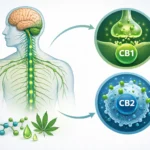
CB1 receptors are expressed throughout the nociceptive pathway including in peripheral sensory neurons, spinal cord dorsal horn neurons and multiple brain regions involved in pain processing. CB2 receptors are found on peripheral immune cells and activated microglia in the central nervous system. Activation of both receptor types produces pain-modulating effects that are particularly relevant to the sensitization mechanisms that underlie neuropathic pain.
CBD’s inhibition of TRPV1 receptors is directly relevant to neuropathic pain because TRPV1 upregulation and sensitization in peripheral nerve fibers contributes to the hypersensitivity characteristic of many neuropathic conditions. By desensitizing TRPV1 after initial activation, CBD may reduce the abnormal peripheral input that drives and maintains central sensitization.
The glycine receptor modulation produced by CBD in the spinal cord is a less-discussed but potentially important mechanism for neuropathic pain specifically. Glycine receptors in the dorsal horn of the spinal cord play an important role in the gate control of pain signals, and their positive modulation by CBD may help restore inhibitory tone that is lost in central sensitization.
Preclinical evidence for CBD in neuropathic pain models is substantial, with multiple rodent studies demonstrating reductions in allodynia and hyperalgesia with CBD treatment in models of diabetic neuropathy, chemotherapy-induced neuropathy and sciatic nerve injury. Human clinical evidence remains more limited but includes some randomized controlled trials showing benefit of cannabinoid preparations in neuropathic pain conditions.
Transdermal delivery for neuropathic pain
The delivery format matters significantly for neuropathic pain management. Given that neuropathic pain often has a localized component, particularly in peripheral neuropathies affecting specific body regions, the ability to deliver CBD directly to affected tissue through the skin offers potential advantages over systemic oral delivery.
As detailed in our guide to CBD patches for pain and transdermal delivery, transdermal CBD bypasses first-pass liver metabolism and delivers consistent plasma concentrations over an extended wearing period. For neuropathic pain specifically, the consistent delivery profile that avoids the plasma level peaks and troughs of oral dosing is particularly relevant, as neuropathic pain responds better to stable analgesic support than to intermittent dosing.
Alpha-lipoic acid : the most evidence-supported supplement for diabetic neuropathy
Alpha-lipoic acid is a naturally occurring antioxidant compound with the most substantial evidence base of any natural supplement for a specific neuropathic pain indication, namely diabetic peripheral neuropathy. Multiple randomized controlled trials including the SYDNEY and ALADIN trials have demonstrated significant reductions in neuropathic symptoms including pain, burning and tingling with intravenous and oral alpha-lipoic acid supplementation compared to placebo.
The mechanisms include reduction of oxidative stress that damages peripheral nerve fibers in the diabetic metabolic environment, improvement of endoneural blood flow through nitric oxide-dependent vasodilation, and direct nerve fiber regeneration-supporting effects. Doses used in successful clinical trials have typically ranged from 600 to 1200 mg per day of oral alpha-lipoic acid, with intravenous administration at 600 mg per day showing the most consistent and rapid effects.
B vitamins in neuropathic pain
B vitamins, particularly B1 thiamine, B6 pyridoxine and B12 cobalamin, play essential roles in peripheral nerve health and function, and deficiencies in these vitamins are among the most common and most treatable causes of peripheral neuropathy. B12 deficiency neuropathy, common in older adults, vegetarians, vegans and people using proton pump inhibitors or metformin long-term, can cause progressive sensory neuropathy that is largely reversible with adequate B12 repletion if caught before significant nerve damage has occurred.
Benfotiamine, a fat-soluble form of thiamine with significantly higher bioavailability than standard thiamine, has shown specific benefit in diabetic neuropathy in clinical trials, reducing neuropathic symptoms and markers of advanced glycation end-product accumulation that contribute to nerve damage in the diabetic metabolic environment.









Comments