

Spend five minutes reading CBD brand websites and you will encounter a consistent story: CBD calms the nervous system, lowers cortisol, and dissolves stress. The language is confident. The science behind it is considerably more qualified. Understanding the difference between what is reasonably supported and what is marketing gloss is worth the effort, especially if you are considering CBD as part of a stress management approach.
Cortisol, stress, and the endocannabinoid system
Cortisol is the body’s primary stress hormone, released by the adrenal glands in response to perceived threats or demands. In short bursts, it is useful — it sharpens focus, mobilises energy, and prepares the body to respond. Chronically elevated cortisol is a different matter, associated with disrupted sleep, immune suppression, weight changes, and mood instability.
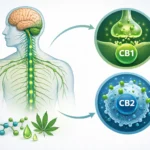
The endocannabinoid system is involved in how the body regulates its stress response. The hypothalamic-pituitary-adrenal axis, which governs cortisol release, has cannabinoid receptors at multiple points. Animal studies have shown that endocannabinoid signalling can modulate this axis, which forms the biological basis for claims that CBD might influence cortisol levels.
The jump from “the system exists” to “CBD reliably lowers cortisol in humans” is where things get complicated.
What the human evidence actually supports
Human research on CBD and cortisol is limited. One study found that high doses of CBD appeared to blunt cortisol response in healthy volunteers. More recent work has focused on CBD’s effects on anxiety, which is related to but not identical with cortisol activity.
A study published in The Permanente Journal, which followed 72 adults over several months, found meaningful reductions in anxiety scores for the majority of participants. Anxiety and cortisol are closely linked — chronic anxiety tends to drive elevated cortisol over time — so a reduction in anxiety could plausibly translate to a calmer cortisol profile. But that is an inference, not a directly measured outcome.
The honest summary: there is biological plausibility, some early human evidence, and a great deal of anecdotal reporting suggesting CBD reduces perceived stress. There is not yet robust, large-scale clinical evidence confirming that CBD reliably lowers cortisol under everyday conditions.
How CBD compares to other approaches
Several other approaches to stress regulation have stronger or at least better-established evidence bases. Ashwagandha has been studied in multiple randomised controlled trials and shown consistent results in reducing self-reported stress and cortisol levels. Morning sunlight exposure affects cortisol by anchoring the circadian rhythm — the natural cortisol peak triggered by early light helps regulate alertness and supports a healthier stress response curve across the day. Gut health is another area with growing relevance: the gut-brain axis influences neurotransmitter production and inflammatory signalling, both of which interact with stress physiology.
CBD sits alongside these options rather than above them. It may be a useful addition for some people, but framing it as a cortisol-lowering solution without acknowledging the limits of the evidence does consumers a disservice.
The quality problem
Even if the evidence for CBD and stress were stronger, it would only apply to products that actually contain what they claim. Independent analyses of the CBD market have found significant variation between labelled and actual CBD content in commercially available products. A product with less CBD than advertised is unlikely to produce effects associated with the doses studied in research.
This makes product quality a genuine variable in whether CBD works for any given person. Someone who tries a poorly manufactured product, notices nothing, and concludes that CBD is ineffective has not really tested CBD — they have tested that brand’s quality control. Checking for independent lab reports and knowing what questions to ask before you buy CBD makes that kind of evaluation far more reliable.
A grounded way to think about CBD for stress
CBD is neither a miracle nor a myth. The biological mechanisms are real, the early evidence is encouraging, and many people report genuine benefit. It is also not a substitute for addressing the structural causes of chronic stress, and the marketing surrounding it routinely overstates what the science currently supports.
Used as one tool among several — alongside sleep hygiene, physical activity, and nutrition — CBD is a reasonable option to explore. Approached as a standalone fix with no attention to the rest of the picture, the results are likely to be underwhelming.
The stress response is a system. Anything that genuinely supports it does so by interacting with that system in a sustained, consistent way. CBD, at its best, may be one means of nudging it toward better balance. Whether it does that for you specifically depends on factors no marketing claim can predict.









Comments