

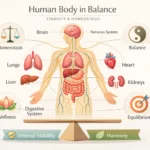
Stress is not an enemy but a biological response designed to protect the body. The challenge arises when stress signals remain active for too long or fail to resolve efficiently. The human body relies on a network of internal signals to regulate stress responses and restore balance without external intervention. These mechanisms operate continuously, adjusting physiological and psychological states in response to changing conditions.
- The Stress Response as a Communication System
- Nervous System Feedback and Autonomic Control
- Hormonal Signals That Restore Balance
- Neurotransmitters and Emotional Modulation
- Immune System Signaling and Stress
- Breathing as a Direct Regulatory Signal
- Gut-Brain Communication
- The Endocannabinoid System and Stress Modulation
- Sensory Input and Environmental Cues
- Recognizing Adaptive Stress Signals
The Stress Response as a Communication System
Stress regulation begins with perception. The brain evaluates environmental cues and determines if a response is necessary. When a potential threat is detected, the hypothalamic-pituitary-adrenal axis activates, releasing cortisol and adrenaline. These hormones prepare the body for action by increasing alertness, mobilizing energy, and sharpening focus.
Once the challenge passes, feedback signals instruct the system to deactivate. Efficient stress regulation depends not on avoiding activation but on completing the cycle. Problems arise when feedback loops fail to signal resolution, leaving the body in a prolonged state of activation.
Nervous System Feedback and Autonomic Control
The autonomic nervous system is central to stress regulation. It consists of two complementary branches. The sympathetic branch increases readiness and alertness, while the parasympathetic branch promotes recovery and restoration. Balanced signaling between these branches allows the body to adapt without becoming overwhelmed.
Heart rate variability is one indicator of autonomic flexibility. Higher variability reflects a nervous system capable of shifting efficiently between activation and relaxation. Reduced variability often accompanies chronic stress and reduced adaptive capacity.
Hormonal Signals That Restore Balance
Hormones act as long-range messengers in stress regulation. Cortisol follows a natural daily rhythm, rising in the morning and gradually declining toward evening. This pattern supports energy availability during the day and rest at night.
Disrupted cortisol rhythms interfere with sleep quality, immune function, and emotional stability. Melatonin, another key hormone, signals the onset of rest and recovery. Exposure to natural light during the day and darkness at night reinforces these hormonal signals and supports circadian regulation.
Neurotransmitters and Emotional Modulation
Neurotransmitters play a critical role in emotional resilience. Serotonin influences mood stability, dopamine affects motivation, and GABA contributes to neural calm. These chemicals are regulated through synthesis, release, and reuptake processes that respond dynamically to stress exposure.
Chronic stress can alter neurotransmitter balance, reducing the brain’s ability to return to baseline after activation. Natural regulatory signals help prevent these shifts by maintaining efficient communication between neurons.
Immune System Signaling and Stress
The immune system responds to stress through inflammatory signaling. Acute stress can enhance immune readiness, but prolonged activation increases inflammatory markers. Cytokines act as messengers that coordinate immune responses and communicate with the brain.
When inflammatory signaling becomes excessive, it can influence mood, energy levels, and cognitive clarity. Regulatory feedback mechanisms normally limit this response, reinforcing the importance of balanced immune communication in stress regulation.
Breathing as a Direct Regulatory Signal
Breathing is one of the few physiological processes that can be consciously influenced and directly affect stress signaling. Slow, controlled breathing activates parasympathetic pathways, reducing heart rate and muscle tension.
This respiratory feedback sends signals to the brain that the environment is safe, encouraging deactivation of stress responses. Over time, consistent breathing patterns reinforce neural circuits associated with calm and recovery.
Gut-Brain Communication
The digestive system communicates continuously with the nervous system through neural, hormonal, and immune pathways. The gut microbiota influences neurotransmitter production and inflammatory signaling, affecting stress perception and emotional regulation.
Digestive discomfort often coincides with heightened stress, reflecting disrupted gut-brain signaling. Supporting digestive rhythm and microbial balance contributes indirectly to stress resilience by stabilizing internal communication networks.
The Endocannabinoid System and Stress Modulation
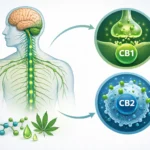
The endocannabinoid system acts as a regulatory layer that fine-tunes stress responses. It influences neurotransmitter release, immune signaling, and hormonal feedback. This system helps prevent overactivation by dampening excessive signals and supporting return to equilibrium.
Scientific interest in CBD’s role in supporting internal balance stems from its interaction with this regulatory network. Rather than initiating stress responses, this pathway contributes to modulation and stabilization of existing signals.
Sensory Input and Environmental Cues
External sensory input affects internal stress regulation. Natural light, temperature, sound, and movement all provide feedback to the nervous system. Regular exposure to daylight supports circadian alignment, while natural movement reinforces neuromuscular feedback loops.
Artificial environments that lack sensory variation can confuse regulatory signals, increasing cognitive load and stress perception. Aligning daily routines with natural cues enhances the body’s ability to self-regulate.
Recognizing Adaptive Stress Signals
Not all stress signals indicate dysfunction. Temporary increases in alertness, heart rate, or muscle tension are adaptive responses. The key indicator of healthy regulation is recovery speed. When internal signals efficiently guide the body back to baseline, stress becomes a manageable and even beneficial process.
Understanding these natural regulatory mechanisms shifts the focus from suppression to support. The body is equipped with sophisticated signaling systems designed to maintain stability. Stress becomes problematic only when these signals are ignored or overwhelmed over time.








Comments