

The wellness drink space is crowded with ingredients whose health claims substantially outrun the evidence. Against this backdrop, ube, the Philippine purple yam that has generated significant consumer interest through its extraordinary visual impact, deserves careful examination rather than either uncritical enthusiasm or reflexive dismissal. The reality is that the nutritional case for ube is considerably more substantive than most superfood marketing cycles produce, grounded in a phytochemical profile whose biological activity has attracted genuine scientific attention.
Ube, Dioscorea alata, has been a cornerstone of Filipino cuisine and celebration culture for centuries. Its deep violet-purple colour, produced by acylated anthocyanins whose stability during processing and gastrointestinal transit is unusually high compared to anthocyanins from most other food sources, is both its most immediately recognisable characteristic and an indicator of its most significant nutritional properties. The same pigments that make Ube Latte photographically spectacular are biologically active compounds whose effects on the gut microbiome, systemic inflammation and antioxidant defence systems have been documented in peer-reviewed research.
The phytochemical profile of ube and what it means for health
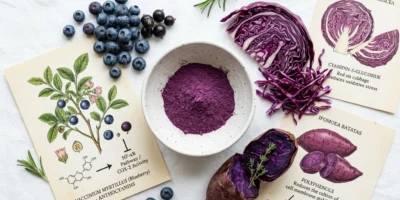
The acylated anthocyanins that give ube its colour are structurally distinct from the non-acylated anthocyanins found in blueberries, strawberries and most other commonly consumed purple and red foods. This structural difference has significant nutritional consequences. Non-acylated anthocyanins are relatively unstable in the neutral to alkaline environment of the small intestine, undergoing structural changes that were historically interpreted as degradation but are now understood to represent transformation into smaller bioactive metabolites.
Acylated anthocyanins, by contrast, maintain their structural integrity more effectively through the gastrointestinal environment, meaning that a greater proportion of the ube’s anthocyanin content arrives intact at the colon. This is nutritionally significant because the colon is where the most important health-relevant interactions between dietary anthocyanins and the gut microbiota occur. The colonic microbiota ferments anthocyanins into smaller phenolic metabolites including protocatechuic acid and hydroxycinnamic acid derivatives, many of which are absorbed into the systemic circulation and produce anti-inflammatory and antioxidant effects at sites distant from the gut.
Research published in Food Chemistry demonstrated that purple yam anthocyanins produced significantly stronger prebiotic effects than equivalent concentrations of berry anthocyanins in colonic fermentation models, selectively increasing Lactobacillus and Bifidobacterium populations to a greater degree, a finding consistent with the enhanced colonic delivery predicted by the greater stability of acylated anthocyanins.
Ube’s prebiotic fibre composition and gut health implications
Beyond its anthocyanin content, ube contains a combination of dietary fibres with complementary prebiotic mechanisms that together support gut microbiome health through multiple pathways simultaneously.
Resistant starch is the most quantitatively significant prebiotic component of ube. When starch is cooked and then cooled, a proportion undergoes retrogradation into a crystalline structure that resists digestion by small intestinal enzymes and arrives intact in the colon. Ube preparations that involve cooking followed by partial cooling, as in ube powder production and many traditional Filipino ube dishes, contain meaningful amounts of this resistant starch. Colonic fermentation of resistant starch by the gut microbiota produces butyrate, the short-chain fatty acid that is the primary energy source for colonocytes and whose adequate production is essential for maintaining the integrity of the gut epithelial barrier.
Inulin-type fructooligosaccharides are a second prebiotic fraction of ube with a different fermentation profile from resistant starch. These short-chain prebiotic fibres are selectively fermented by Bifidobacterium species and have well-established effects on reducing gut transit time and improving markers of digestive comfort in randomised controlled trials. The combination of resistant starch driving butyrate production and fructooligosaccharides selectively stimulating Bifidobacterium gives ube a more complex prebiotic profile than most single food sources.
How the ube latte format affects bioavailability
The way ube is consumed affects the bioavailability of its bioactive compounds in ways that are worth understanding for those incorporating it into a health-focused routine. Preparing ube as a warm milk-based latte, rather than consuming it as a cold dessert or standalone powder, has several nutritional implications.
The fat content of the milk used in an ube latte supports the absorption of fat-soluble phytochemicals that co-occur with the anthocyanins in ube. While anthocyanins themselves are water-soluble, the carotenoids and fat-soluble vitamins present in ube are absorbed more efficiently in the presence of dietary fat. Full-fat dairy milk and coconut milk provide sufficient fat content for this purpose, while lower-fat plant milks may offer reduced fat-soluble compound absorption.
The warm preparation temperature used for lattes raises a relevant question about anthocyanin stability under heat. Moderate heating below 70°C, as typically used for latte preparation, produces manageable anthocyanin losses in the range of 10% to 20% over short preparation times, a level that does not negate the prebiotic value of the preparation. Avoiding boiling the milk and incorporating the ube powder into warm rather than actively boiling liquid reduces heat-related losses further.
Ube versus taro : why the distinction matters nutritionally
The existing article on this site comparing ube and taro establishes the flavour and culinary differences between these two roots. From a purely nutritional perspective, the most significant distinction is the anthocyanin content. Taro, Colocasia esculenta, contains much lower concentrations of anthocyanins than ube, and its flesh colour is a pale grey-purple rather than the vivid violet of Dioscorea alata. The prebiotic fibre profile of taro differs somewhat from ube as well, with taro’s resistant starch content varying more significantly with cooking method.
For wellness-focused consumers choosing between these roots on nutritional grounds, ube’s anthocyanin concentration and the specific prebiotic fibre combination it provides give it a meaningfully different health profile from taro, justifying the distinction beyond the culinary and aesthetic differences.








Comments