
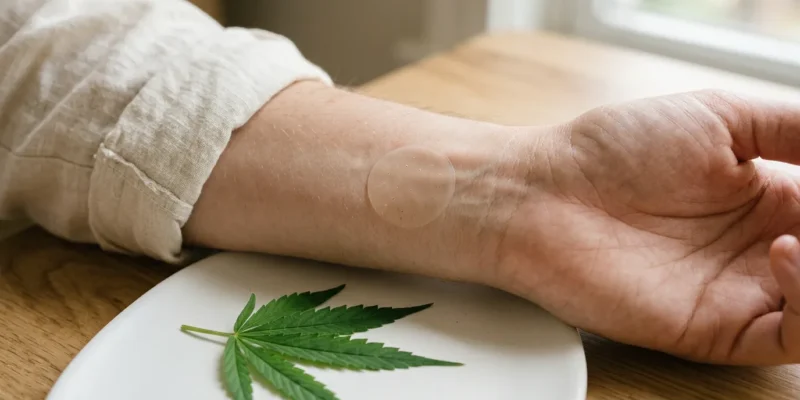
Pain management is one of the areas where CBD has attracted the most serious scientific attention, and for good reason. The endocannabinoid system, which CBD interacts with through multiple receptor pathways, plays a documented role in modulating pain signals at both the peripheral and central nervous system levels. What has changed in recent years is not the understanding of CBD’s potential relevance to pain but the sophistication of the delivery formats available, and among these, the transdermal patch has emerged as one of the most scientifically compelling options for people dealing with localized or persistent pain conditions.
The fundamental problem with most CBD formats is bioavailability. Oral CBD, whether in oil, capsule or edible form, must pass through the digestive system and survive first-pass liver metabolism before reaching the bloodstream. This process degrades a significant proportion of the CBD before it ever reaches the tissues where it is needed, with bioavailability estimates for oral CBD ranging between 6% and 19% in most studies. Inhaled CBD bypasses this problem but delivers a short-duration effect and is not suitable for all users or all pain types. The transdermal patch solves the bioavailability problem differently and offers characteristics that make it specifically well-suited to pain management applications.
CBDISSIMO offers one of the most well-formulated transdermal CBD patches on the market, with documented cannabinoid content and full third-party laboratory testing for every batch. You can find them here: https://cbdissimo.com/patch-cbd/
How transdermal CBD delivery works
The skin is a remarkably effective barrier against most substances, which is precisely what makes it such an interesting target for therapeutic delivery. The outer layer of the skin, the stratum corneum, is composed of densely packed dead cells embedded in a lipid matrix that prevents most water-soluble molecules from penetrating into the deeper layers where blood vessels and nerve endings are located. CBD, being a lipophilic molecule, has an inherent advantage in this context: its fat-solubility makes it more compatible with the lipid structure of the skin barrier than most pharmaceutical compounds.
A transdermal CBD patch works by maintaining a concentration gradient between the patch reservoir and the skin surface. The patch contains CBD in a formulation that promotes continuous, controlled release of the molecule into the outer skin layers. From there, CBD diffuses through the stratum corneum into the viable epidermis and dermis, where it is absorbed into the capillary network and distributed through the systemic circulation without passing through the liver first.
This bypass of first-pass hepatic metabolism is the primary pharmacokinetic advantage of transdermal delivery over oral formats. By avoiding the liver on its first pass through the body, transdermal CBD reaches the bloodstream in a less metabolized form and at higher concentrations than the equivalent oral dose. Studies on transdermal cannabinoid delivery have consistently shown bioavailability figures significantly higher than oral administration for equivalent doses.
The release profile is the second major advantage. Unlike inhaled CBD which produces a rapid peak and decline in plasma concentrations, or oral CBD which shows a delayed peak followed by a prolonged but variable decline, a well-formulated transdermal patch delivers CBD at a relatively steady rate over the wearing period, typically 8 to 24 hours depending on the product design. This steady-state delivery is particularly relevant for pain management, where consistent plasma CBD concentrations are more effective than the peaks and troughs produced by intermittent dosing with other formats.
Why the patch format is specifically suited to pain management
Pain, particularly chronic pain, responds better to consistent pharmacological support than to intermittent dosing. This principle is well established in conventional pain medicine: around-the-clock dosing with analgesics produces better pain control than as-needed dosing in most chronic pain conditions, because it prevents the breakthrough pain that occurs when plasma drug levels fall below the effective threshold.
The transdermal patch delivers exactly this kind of consistent support. A patch applied in the morning maintains relatively stable CBD delivery throughout the day without requiring the user to remember multiple doses, without the variability introduced by food intake that affects oral CBD absorption, and without the rapid plasma level fluctuations that characterize inhaled formats.
Localized application is the second specific advantage for pain. While a patch delivers CBD systemically through the circulation, applying it in proximity to the area of pain may produce higher local tissue concentrations in the underlying muscle, joint or nerve tissue, potentially enhancing the local anti-inflammatory and analgesic effects at the site of the problem. This localized concentration effect is not fully established in the clinical literature but is consistent with the pharmacokinetic principles of transdermal delivery.
The absence of gastrointestinal exposure is a practical advantage for the significant proportion of chronic pain patients who also use other medications. CBD inhibits certain cytochrome P450 enzymes involved in the metabolism of many pharmaceutical drugs, and this interaction is more pronounced with oral CBD that passes through the liver than with transdermal CBD that bypasses it. For patients who manage chronic pain with pharmaceutical medications alongside natural supplements, the transdermal route reduces the potential for metabolic interactions.
What the research says about CBD and pain mechanisms
CBD’s potential relevance to pain management operates through several distinct biological mechanisms that are worth understanding separately, as they explain why CBD may be more or less useful depending on the type of pain involved.
TRPV1 receptor modulation is one of the most directly relevant mechanisms. TRPV1, sometimes called the capsaicin receptor, is a pain and temperature sensing receptor expressed on peripheral sensory neurons. CBD binds to TRPV1 and can desensitize it after initial activation, reducing its responsiveness to painful stimuli. This mechanism is particularly relevant to neuropathic and inflammatory pain where TRPV1 upregulation contributes to pain hypersensitivity.
CB2 receptor activation in peripheral tissues is a second relevant mechanism. CB2 receptors are expressed on immune cells throughout the body and their activation produces anti-inflammatory effects through multiple pathways, including reduction of pro-inflammatory cytokine production and modulation of macrophage activity. The anti-inflammatory effects of CBD at peripheral tissues are among the most consistently documented in the preclinical literature and are directly relevant to inflammatory pain conditions.
Anandamide reuptake inhibition increases endogenous endocannabinoid tone by reducing the breakdown of the body’s own pain-modulating cannabinoid. This mechanism, which CBD achieves by inhibiting the FAAH enzyme, effectively amplifies the body’s natural pain regulation system rather than introducing an external pharmacological agent.
The glycine receptor modulation that CBD produces in the spinal cord is less discussed but may be relevant to certain types of chronic pain. Glycine receptors are involved in pain signal processing in the spinal cord, and CBD’s positive modulation of these receptors may contribute to reduced central sensitization in chronic pain conditions.
Practical considerations for using CBD patches
Skin preparation before patch application significantly affects absorption efficiency. Clean, dry skin without lotions, oils or residues provides the best surface for patch adhesion and consistent CBD diffusion. The inner wrist, upper arm, shoulder, lower back and the area behind the knee are commonly recommended application sites due to their relatively thin skin and good vascular supply.
Rotation of application sites is recommended for regular users to prevent local skin irritation from the adhesive and to maintain consistent absorption efficiency. The same skin area repeatedly exposed to patch adhesive can become sensitized over time, which both reduces comfort and potentially affects the integrity of the skin barrier through which CBD must diffuse.
Patch storage before use is important for maintaining the integrity of the CBD formulation. Patches should be stored in their sealed packaging away from heat and direct light, which can degrade both the CBD and the delivery matrix that controls the release rate.








Comments