
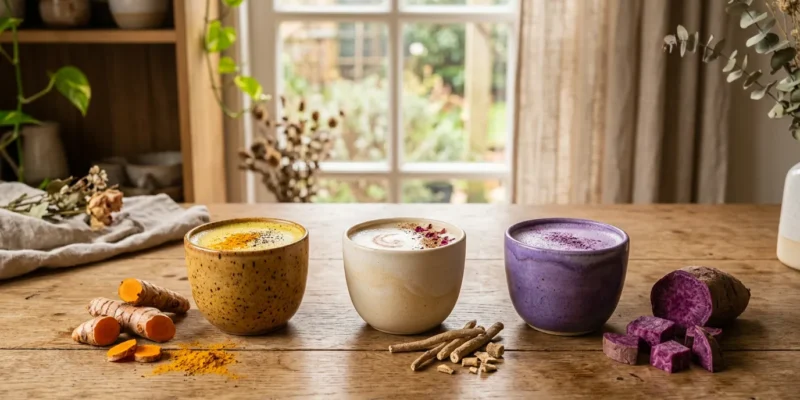
Stress recovery is one of the most searched topics in wellness, and it sits at the intersection of genuinely important physiology and considerable marketing noise. The category of adaptogenic warm drinks, encompassing everything from ashwagandha moon milk to golden turmeric lattes to reishi mushroom coffee to the recently popular ube latte, occupies a space where real biological activity and unsubstantiated claims coexist in ways that can be difficult for even health-literate consumers to navigate.
The challenge is not that these ingredients are without merit. Several of the botanicals featured in functional lattes have genuine clinical evidence supporting specific effects on stress physiology, inflammatory signalling and cognitive function. The challenge is that the evidence for each ingredient is specific to particular compounds, particular doses and particular forms that may or may not be delivered by any given commercial product. Understanding what the evidence actually shows, at what doses effects are documented, and how preparation method affects the delivery of active compounds allows health-focused consumers to make genuinely informed choices about which functional drinks merit incorporation into a wellness routine.
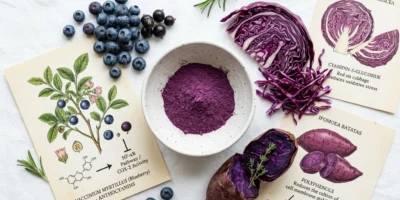
The ube latte, whose anthocyanin-mediated gut and anti-inflammatory effects are explored in our guides to ube latte wellness benefits, fits into this landscape as an ingredient with specific documented mechanisms rather than a general adaptogenic claim, a distinction worth understanding when evaluating functional drink options.
The physiology of stress and why dietary intervention can matter
The stress response, mediated through activation of the hypothalamic-pituitary-adrenal axis and the sympathetic nervous system, is a physiologically essential system whose chronic activation under modern lifestyle conditions produces a cascade of downstream effects that dietary and lifestyle interventions can meaningfully modulate.
Cortisol, the primary glucocorticoid released by the adrenal cortex in response to HPA axis activation, is the hormone whose chronic elevation is most directly associated with the health consequences of sustained stress. Elevated cortisol suppresses immune function, disrupts sleep architecture, promotes visceral fat accumulation, impairs hippocampal neurogenesis and increases gut permeability through downregulation of tight junction protein expression. The gut permeability effect is particularly relevant for understanding how stress and dietary interventions interact, as a leaky gut amplifies systemic inflammatory signalling that in turn further dysregulates the stress response, creating a feedback cycle that dietary anti-inflammatory compounds can help interrupt.
Several of the botanicals incorporated into functional lattes directly modulate HPA axis activity or cortisol metabolism, providing a mechanistic rationale for their stress-supporting claims that goes beyond traditional use narratives.
Ashwagandha : cortisol modulation with the strongest clinical evidence
As covered elsewhere on this site, ashwagandha has among the strongest clinical evidence of any botanical supplement for stress and anxiety reduction. The critical addition for functional drink consumers is understanding the dose and standardisation requirements for these effects.
The clinical trials demonstrating significant cortisol reduction and anxiety improvement have used standardised ashwagandha root or root and leaf extracts at doses of 240 to 600 mg daily, with the active withanolides standardised to concentrations of at least 5% to 35% depending on the extract type. A moon milk or functional latte containing a small amount of non-standardised ashwagandha powder may deliver withanolide content far below the threshold at which clinical effects have been demonstrated.
When evaluating ashwagandha-containing functional drinks, checking the ashwagandha content in milligrams, the standardisation specification and the withanolide percentage is therefore as important as the product’s overall ingredient list. A well-formulated ashwagandha latte using a clinically dosed standardised extract can genuinely support HPA axis regulation and cortisol reduction. A product using token amounts of non-standardised ashwagandha powder provides negligible active compounds regardless of the wellness credentials of the overall product.
Turmeric and curcumin : anti-inflammatory stress support
The anti-inflammatory mechanisms of curcumin, the principal bioactive compound in turmeric, are among the best documented of any dietary compound, and their relevance to stress recovery operates through the inflammatory dimension of the stress response. Chronic stress elevates pro-inflammatory cytokine production through cortisol-mediated immune dysregulation, and the NF-kB inhibition and COX-2 inhibition produced by curcumin can help moderate this stress-induced inflammatory amplification.
The bioavailability challenge that limits standard curcumin is well established and applies equally to golden milk lattes as to curcumin supplements. The addition of black pepper containing piperine is the most practical and evidence-supported intervention for improving curcumin absorption in a home latte preparation, with studies demonstrating bioavailability improvements of up to 2000% from piperine co-administration. This makes black pepper a non-negotiable addition for any turmeric latte preparation whose purpose extends beyond flavour to therapeutic intention.
The cumulative anti-inflammatory effect of daily turmeric latte consumption with black pepper operates over weeks to months rather than acutely, making golden milk most appropriate as a consistent daily practice rather than an acute stress intervention. Human trials demonstrating reductions in CRP and other inflammatory markers have typically run for six to twelve weeks, reflecting the timeline over which consistent curcumin intake produces measurable systemic effects.
L-theanine from matcha : acute cognitive stress modulation
Matcha green tea contains L-theanine at concentrations of approximately 20 to 45 mg per gram of matcha powder, providing 40 to 90 mg per standard latte serving, which falls within the dose range used in randomised controlled trials demonstrating acute reductions in stress reactivity and improvements in alert relaxation.
The acute cognitive effects of L-theanine are particularly relevant for stress management because they operate through a different mechanism from cortisol-modulating adaptogens, working directly on alpha brain wave activity rather than on HPA axis regulation. This makes matcha lattes most useful as a same-day cognitive stress management tool, reducing the psychological and physiological reactivity to acute stressors, while ashwagandha and turmeric work on the longer-term inflammatory and hormonal dimensions of chronic stress.
Combining a morning matcha latte for acute cognitive stress resilience with an evening ashwagandha moon milk for cortisol reduction and sleep quality support creates a functional drink routine whose combined mechanisms address both the acute and chronic dimensions of stress physiology in ways that individual ingredients cannot accomplish alone.







Comments