
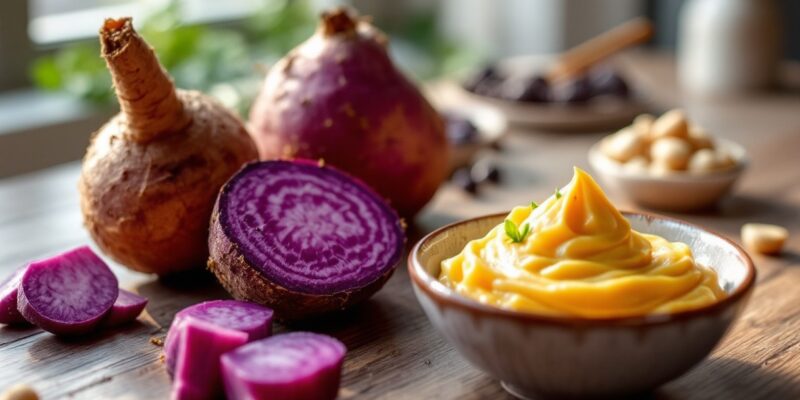
Ube and taro are two popular starchy tubers widely cherished for their distinctive flavors and vibrant colors. These root vegetables offer intriguing differences in culinary uses, sweetness, and nutrition. Often incorporated into various dishes across cultures, they present an array of textures and tastes that captivate food enthusiasts. Understanding the intricacies of ube and taro allows us to appreciate them as more than just ingredients; they are rich companions on our culinary journey.
The unique characteristics of ube
Originally hailing from the Philippines, ube stands out with its striking purple hue. A type of yam, ube is distinct not only in its color but also in the sweet, nutty flavor it brings to recipes. Its texture is smoother compared to other tubers, making it a favorite in desserts such as ice creams and cakes where its remarkable coloration adds visual appeal. The sweetness of ube pairs beautifully with its creamy texture, creating unique sensory combinations in culinary creations.
In terms of nutrition, ube is valued for its complex carbohydrates, offering a steady energy source without causing sharp spikes in blood sugar levels. It is a great option for those looking to maintain balanced energy throughout the day. Aside from its carbohydrate content, ube is known to contain vitamins and antioxidants, which contribute to overall health and well-being. While it provides a delightful culinary experience, its nutritional profile enhances its role in a balanced diet.
Culinary applications of ube
Ube finds its way into several sweet delights, particularly within Filipino cuisine. From traditional halaya, a type of jam made with grated ube, to ube-flavored ice cream, this tuber tantalizes the palate with its luscious color and taste. Its natural deep purple acts as a natural food coloring, adding vibrancy to any dish. Beyond desserts, adventurous cooks incorporate ube into savory dishes, where its mild sweetness complements spicy and salty flavors harmoniously.
- 🍰 Versatile ingredient: Enhances both sweet and savory dishes
- 🎨 Natural coloring: Adds vivid color to foods
The distinctive attributes of taro
Taro has a different story but shares a place of importance in various culinary traditions. Originating from Southeast Asia, taro’s presence extends across many global cuisines. Unlike the bold color of ube, taro sports a subtle exterior with a pale flesh that hints towards soft purples when cooked. Its slightly earthy flavor with a hint of sweetness makes it adaptable in many preparations.
The texture of taro is unmistakably starchy, lending itself to cooking methods that highlight its ability to absorb flavors. It serves as a wonderful base ingredient in soups and stews, bringing heartiness to these comforting meals. Besides its culinary versatility, taro is appreciated for its health benefits derived from its fiber content and minimal fat, supporting digestion and cardiovascular wellness.
Culinary uses of taro
Taro is a staple in Asian and Pacific Islander dishes. For instance, in Hawaii, poi—a traditional dish—features taro mashed to a smooth consistency, showcasing its adaptability. In Chinese cuisine, taro is often included in savory dumplings and mooncakes, where its delicate essence elevates the dish. The ability of taro to blend with other ingredients while maintaining a unique character makes it a valuable player in diverse gastronomic contexts.
- 🌽 Flavorsome base: Absorbs and complements other flavors seamlessly
- 🥟 Cultural culinary icon: Essential in traditional dishes worldwide
Nutritional showdown: ube vs taro
When comparing the nutritional attributes of ube and taro, both demonstrate strengths rooted in their status as nutritious starchy tubers. Each offers different health advantages, highlighting their importance beyond mere culinary use. The central differentiation lies in the variety and concentration of nutrients each provides.
| 📌 Nutrient | 💜 Ube | ✨ Taro |
|---|---|---|
| Calories (per 100g) | 120 | 110 |
| Complex carbohydrates | 26g | 27g |
| Dietary fiber | 4g | 5g |
| Vitamin C | 15mg | 5mg |
| Calcium | 22mg | 28mg |
From the table above, we observe that while taro provides marginally fewer calories, it boasts higher fiber and calcium contents. On the other hand, ube excels in vitamin C content, contributing significantly to immune support. Both offer abundant complex carbohydrates, ensuring sustained energy levels ideal for those with active lifestyles.
The health impacts of consuming ube and taro
Embracing ube and taro in one’s diet can be a step towards supporting holistic health goals. Their role extends beyond merely being low glycemic index foods—they encourage biodiversity in meals due to their special nutrient profiles. Individuals focused on heart health might gravitate towards taro for its superior dietary fiber, promoting heart wellness. Simultaneously, those seeking greater antioxidant intake might prefer ube.
A world where your meal blend includes ube or taro may open opportunities to indulge guilt-free in tempting dishes. Through conscientious preparation, leveraging their innate benefits maximizes the satisfaction derived from traditional favorites like pies, puddings, and even bread where either can serve effectively.
Cultural significance and global exploration
Beyond the kitchen, ube and taro hold immense cultural relevance, deeply woven into the traditions of regions where they originate. Whether celebrated during festivals or marking important life events, these tubers signify sustenance, prosperity, and connection.
For instance, oozing heritage, taro symbolizes fertility in Hawaiian customs, often growing near water bodies revered as life-giving sources. Meanwhile, ube is not just a beloved flavor in Filipino festivals but represents joy and abundance during harvests. Around the globe, integrating these foods into contemporary cuisine retells stories anchored in ancestral ties, encouraging culinary cross-pollination.
Modern-day appreciation in global palates
The allure of ube and taro transcends geographical borders, finding new homes among varied culinary landscapes eager to experiment. In recent years, fusion dishes featuring either ingredient have gained traction, accentuating creativity and inclusivity in gastronomy.
Adapting to Western taste preferences, innovative chefs have embraced ube pancakes, taro fries, and artisanal pastries that celebrate their roots while catering to modern palates. This global rise further underscores their ever-expanding influence—not confined to their lands of origin but acknowledged universally.
- 🌍 Global kitchens: Fusion dishes elevate traditional ingredients
- 🔄 Heritage enrichment: New narratives emerging from ancient roots
Final thoughts on choosing between ube and taro
As we delve deeper into understanding and appreciating both ube and taro, choices around incorporating them into our diets emerge more informed. These tubers offer nutritional diversity coupled with profound cultural essence, providing much more than culinary pleasure. Choosing one over the other becomes less about competition but rather celebrating their differences and embracing their contributions to global food culture.
Whether found in a dessert boutique serving ube macarons or at a street market selling taro bubble tea, these starchy tubers connect histories, communities, and flavors across continents. Both remain symbols of an evolving world of tastes, inviting us to explore the unexplored, taste the untasted, and relish every unexpected delight they bring to our tables.









Comments